Data-driven mobility modeling for COVID-19 simulation
Summary
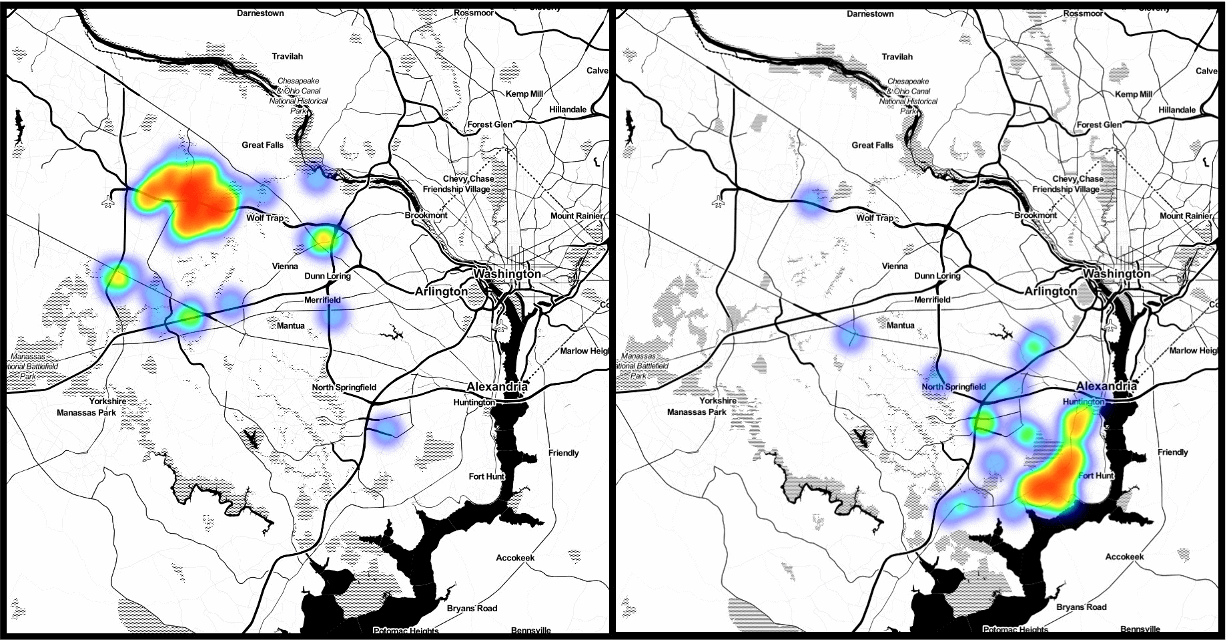
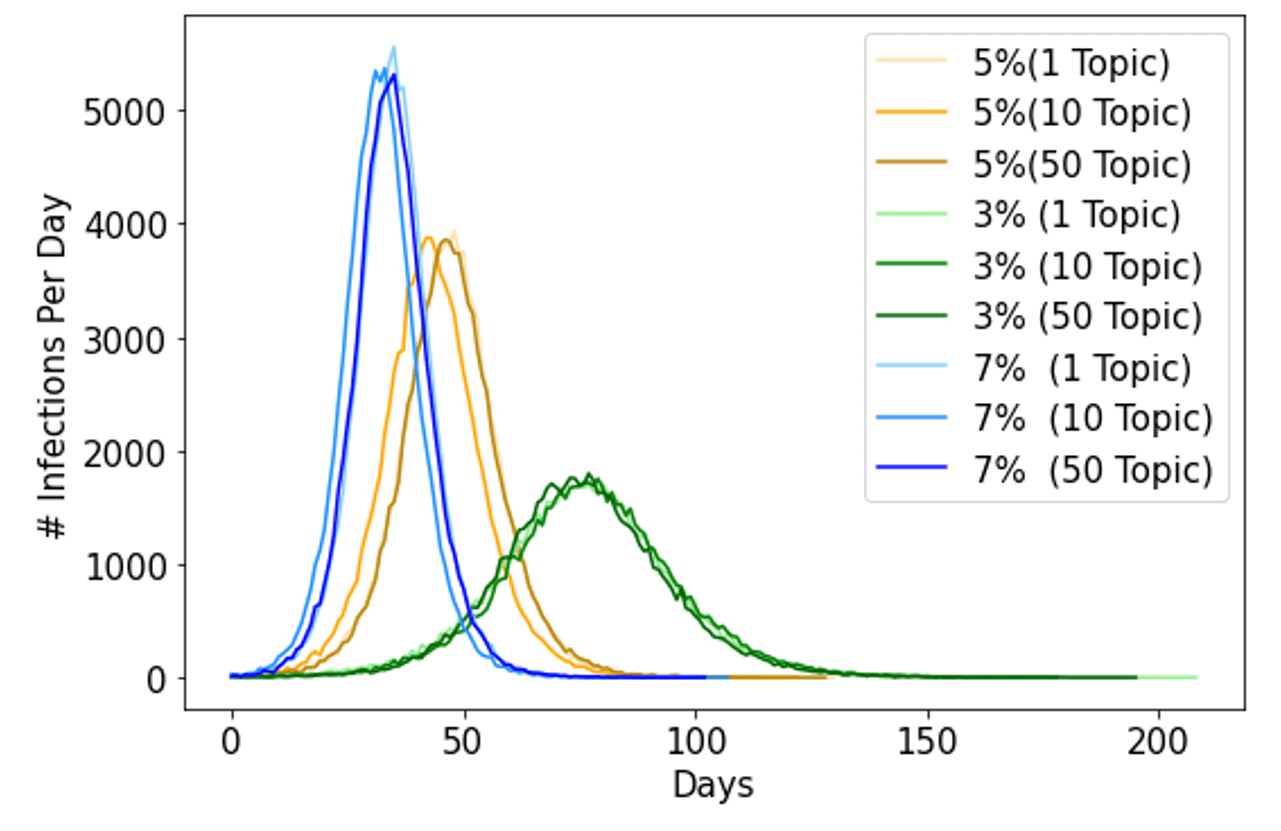
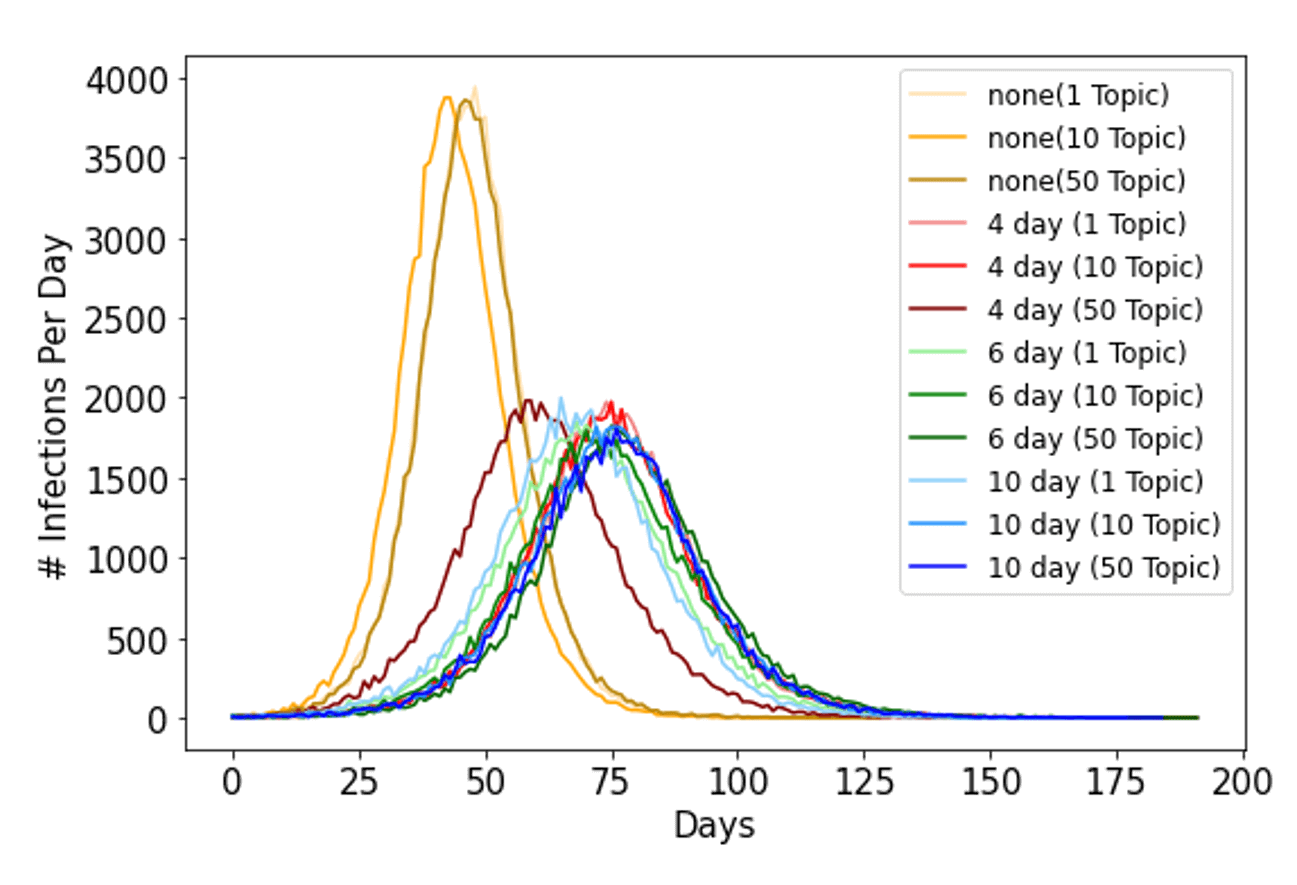
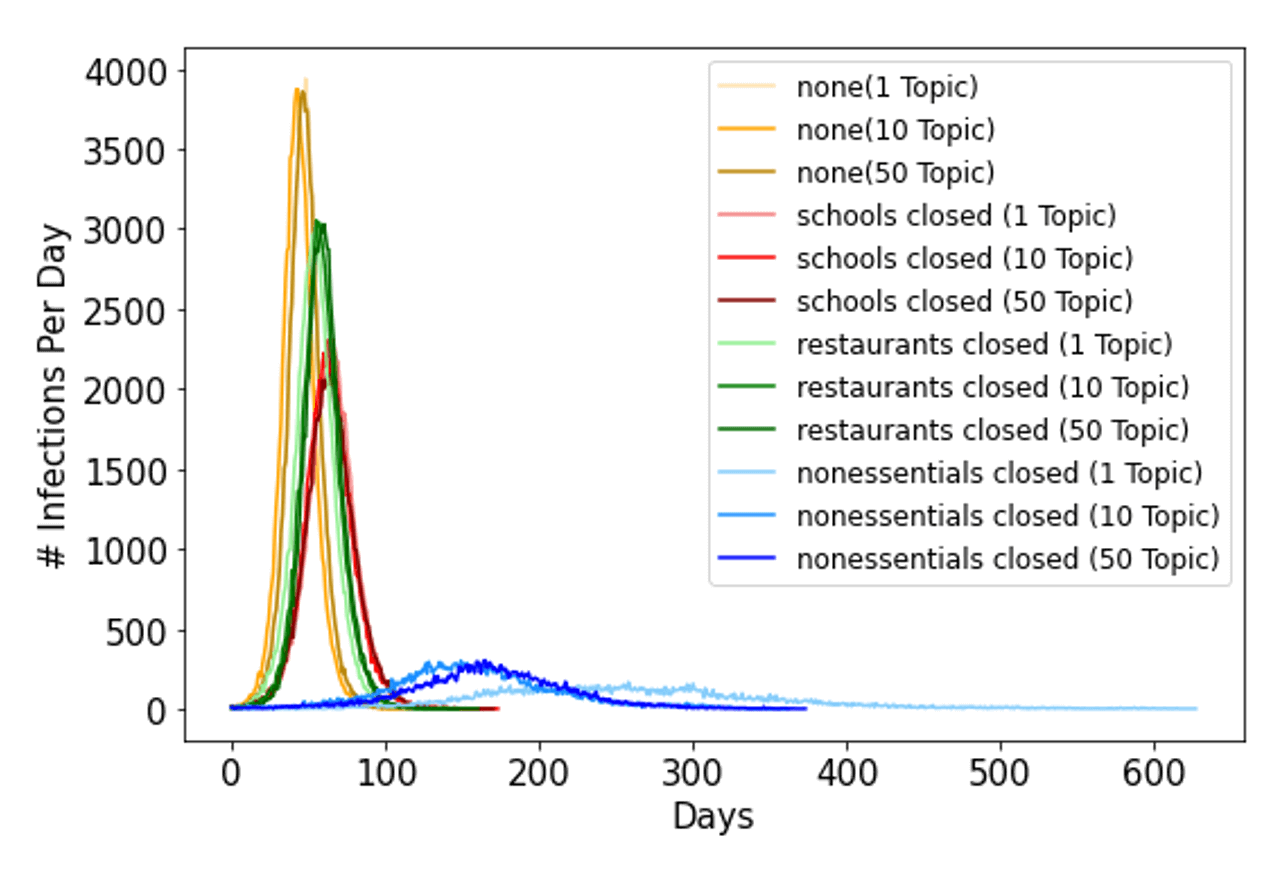
Disease spread is heavily influenced by human mobility. We captured human mobility in a data-driven manner based on Latent Dirichlet Allocation (LDA) fed by SafeGraph mobility data and simulated the spread of COVID-19. In our approach, LDA treats points of interest (POIs) as “words” and agent home census block groups (CBGs) as “documents” to extract “topics” of POIs that frequently appear together in CBG visits, which we then used to simulate agent mobility based on the topic distribution of their home CBG. We compared this LDA-based mobility model against a naive model that assumes random POI visits. This was the first in a series of data-driven COVID-19 models we developed starting in the summer of 2020.
We later created several refined versions of the model: one that could learn from SafeGraph data patterns monthly rather than relying on a static pre-pandemic snapshot, a place-density-based disease spread mechanism, and updated disease timing based on the latest COVID studies at the time.
Pending: a closing note on how the long-run simulation work concluded after the 2021 ANNSIM paper.
Publications & Presentations
- Data-Driven Mobility Models for COVID-19 Simulation Paper BibTeX
- COVID-19 Ensemble Models Using Representative Clustering Paper BibTeX
- Opportunities and Challenges in Developing COVID-19 Simulation Models: Lessons from Six Funded Projects Paper BibTeX
- GMU OSCAR Celebration of Student Success
- GMU College of Science Research Day
Funding
-
NSF #2030685 — RAPID: An Ensemble Approach to Combine Predictions from COVID-19 SimulationsCo-PI
-
NSF #2109647 — Data-Driven Modeling to Improve Understanding of Human Behavior, Mobility, and Disease SpreadSenior Personnel
Last updated on Sep 23, 2026.